Section One: Writing a Mystery Novel — Backwards
When I started writing The Price of Murder, I knew one thing for certain: I needed a destination. I couldn’t just wander through the story hoping to stumble on a satisfying ending. So I began at the end.
I wrote down exactly how the murderer pulled it off, every step, every detail. I mapped out the logic behind their actions, the timeline, the why and the how. That ending became my anchor.
From there, I worked backward. I planted the seeds: the red herrings, the misdirections, the subtle clues that wouldn’t seem important until much later. It was like reverse-engineering a puzzle. I didn’t want readers to feel cheated. I wanted them to be surprised, and then realize the truth had been in front of them the whole time.
All of this happened in my blue notebook. That’s where the real work took place. Sketches of scenes, snippets of dialogue, potential twists, it all lived there first. I didn’t touch the keyboard until the spine of the story was solid. Once I had the key ideas pinned down, then and only then did I start to type.

Section Two: Book Promotion Tips (And Honest Frustrations)
Here’s the truth: I don’t love promoting books. Writing them? That’s where I thrive. But getting people to read your debut novel takes more than just a finished manuscript. Promotion is a whole different skill set and it can be frustrating.
I’ve spent hours watching YouTube videos on how to market a book. Some offer useful advice. Most just repeat the same vague strategies. And the deeper I get into it, the more I realize: this is a full-time job in itself.
This week, I’ve been focused on reviews.
Think about how you shop online. You go to Amazon, you look at the product, and before you buy, you scan the reviews. If there are no reviews or the rating is under four stars most of us click away. So what happens when your book is brand new and has zero reviews?
It’s the classic chicken-and-egg problem:
- No reviews = no trust
- No trust = no sales
- No sales = no reviews
To break that cycle, I used services like Booksprout and Hidden Gems, which help connect authors with readers willing to leave honest reviews. You provide a free copy of your book, and ideally, they post reviews to Amazon, Goodreads, etc.
At first, I thought it was simple: pay the company, get reviews.
It’s not. These platforms don’t guarantee results. Even reviewers want to be drawn to the book — by the cover, the blurb, or the author’s reputation. Which means, just like book sales, you still need visibility. So… chicken and egg, round two.
At some point, I had to consider asking friends and family to leave reviews. But that’s tricky too. I like to keep personal life and work separate. Plus, Amazon’s review policy is strict — if your accounts are even loosely connected (say, by buying them a plant for Easter), their reviews can be flagged and removed.
So no, I’m not enjoying this part. But it’s necessary. And like writing, it’s something I’m learning to navigate — one step at a time.

Section Three: Agatha Christie, Nanna Renee, and the Roots of My Obsession
My love of murder mysteries started early — thanks to my Nanna Renee. We were close when I was a kid. She used to come back from the library with stacks of Agatha Christie novels, the kind with those shadowy, intriguing covers that made you want to crack them open.
I wasn’t a big reader as a teenager, but I was glued to murder mysteries on TV. The clever detectives, the whodunnits, the “aha” moments, I was hooked.
Everything changed when I turned forty. I picked up one of Christie’s novels and couldn’t stop. I read every single one — all 76 books. It became an obsession.
People often think Agatha Christie’s stories are formulaic — murder happens, detective explains everything by the fireplace. But that’s not true. Her plots are wildly varied, incredibly smart, and often deceptive. She was always finding new ways to play with structure and surprise.
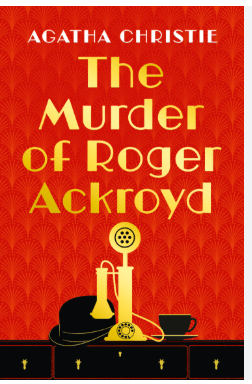
When I started writing The Price of Murder, I didn’t look at Christie’s first book. I asked: Which book made her famous? That led me to The Murder of Roger Ackroyd — a novel with a controversial twist that shocked readers at the time. I borrowed inspiration from that story, especially the way the killer hides in plain sight and how even Poirot is briefly misled.
I wasn’t copying her. I was studying how she created tension, layered clues, and balanced plot with character. She made it look effortless but any writer knows it’s not.
Want to Read Agatha Christie’s Full Collection?
Here’s a complete Agatha Christie book list in order if you’re curious about where to start — or just want to follow in my reading footsteps.
 Alan Moody